Bay County Tax Collector Modernizes with Q-Flow
September 23, 2024
September 23, 2024
Bay County Tax Collector serves a high volume of residents across multiple service areas, including driver services, property tax, and motor vehicle transactions. Operating in a fast-paced public sector environment, the organization faced increasing demand and growing pressure to improve service flow, reduce wait times, and create a more predictable experience for both staff and visitors. The goal was to modernize operations with a structured, digital-first approach that could support scalability and operational clarity.
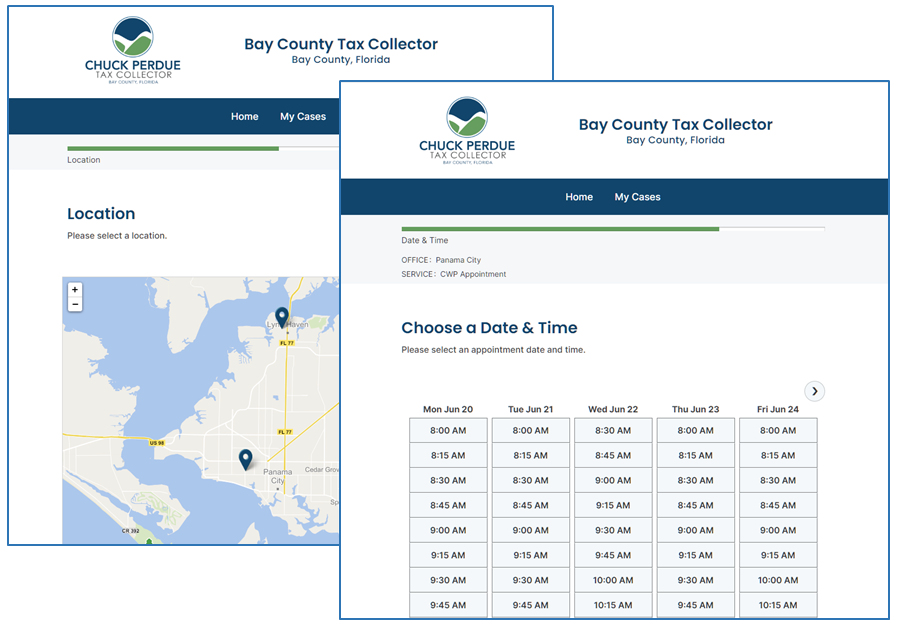
Bay County Tax Collector implemented Q-Flow as the operational backbone for managing appointments, walk-ins, and in-office service delivery. The solution introduced a structured service model that unified scheduling, arrival, and queue management into a single system.
A Virtual Lobby experience was introduced to allow customers to check in digitally, view their place in line, and receive real-time updates. Appointment Management tools enabled better distribution of service demand, while walk-in customers were integrated into the same structured queueing system.
Notifications through SMS and email improved communication before and during visits, reducing missed appointments and uncertainty. Staff were equipped with real-time dashboards and agent workflows that provided visibility into queue status, service demand, and performance metrics.
This transformation shifted the service model from reactive to structured, enabling both customers and staff to move through the process with greater clarity and consistency.
Following implementation, Bay County Tax Collector achieved a more predictable and efficient service model. Wait times became more manageable, and customers experienced a clearer, more transparent journey from arrival to service completion.
Staff were able to operate with greater confidence, supported by real-time data and structured workflows. Bottlenecks were reduced, and service capacity improved without requiring additional physical space.
The organization gained the ability to monitor performance, adjust staffing strategies, and continuously refine operations based on real-time insights.
The modernization of Bay County Tax Collector’s operations created a more structured, transparent, and scalable service environment. Customers now move through their visit with clear expectations, while staff benefit from improved visibility and control. This shift supports long-term operational stability and positions the organization to adapt to future demand with confidence.
Is your organization looking to improve wait times and customer experience with intelligent queue management?